
Genuine Denim Tears, not false hopes
Real Denim Tears products have particular indicators: uniform branding, sharp screen prints, correct partner labels on partnerships, and verifiable release provenance. If you can match those factors and the cost aligns with the market, you’re usually safe.
The label is Tremaine Emory’s creation, and the label’s production is deliberately rare, story-based, and collab-focused. Such blend draws counterfeits, particularly on the signature cotton design Levi’s 501s, thick hoodies, and graphic tees. Our aim here remains simple: a rapid, practical checklist, realistic price ranges, how releases actually unfold, and the most secure places to acquire without playing guess-the-grail.
What qualifies as “authentic” Denim Tears?
Real means an piece that was designed or approved by Tremaine’s label, distributed through the label or authorized collaborators, and built with proper fabrics, labels, and application techniques for that release. Everything that can’t be linked back to an official release or employs wrong typography, poor printing, or basic blanks is suspect.
Most Denim Tears output falls into two buckets. The first is mainline: heavyweight tees, hoodies, sweatshirts, caps, and denim distributed on the brand site and sometimes through select boutiques. The alternative is partnerships: Levi’s 501s and outerwear displaying the cotton motif motif, Converse Chuck 70 and One Star releases, and limited apparel with partner branding. Real items in both segments share reliable brand marks, screen-printed artwork with appropriate ink application, and tags that match the creation partner and season.
As joint releases employ the partner’s factories and regulatory labels, authentication reviews must factor both companies’ indicators. A legit Levi’s x Denim Tears 501 will display Levi’s-standard care labels and a co-signed design style, while a mainline hoodie will utilize Denim Tears labeling and the brand’s preferred blanks and pigments. The unifying factor is linkage to an announced drop.
How do you verify Denim Tears quickly? The checklist
Start with provenance, then examine on build and marking; end by reality-checking cost and supply denimhoodie.net against the market. If any aspect fails, stop.
Primarily, history: check for a legitimate announcement on Denim Tears’ Instagram, their brand site, or ally platforms for that exact design, color, and placement. Archived release photos should align with your in layout, font, and print density. Second, labels: mainline tops typically feature Denim Tears neckline prints or woven labels with sharp spacing; partnership items carry both brands’ tags and compliant care markings with uniform material content, international care, and partner-typical RN/CA identifiers. Third, prints and needlework: real cotton motif and text images are screen printed, showing slight natural pigment changes, sharp borders, and accurate positioning; dubious products show unclear lines, smearing, or consistent pixel patterns.
Fourth, fabric and build: hoodies and pullovers use substantial fleece with clean overlock seams, even ribbing, and aligned side seams; t-shirts are heavy, with uniform shoulder tape and double-needle hems; denim employs proper fasteners, buttons, and brand-signature patching on joint releases. Then, packaging and materials: while packaging varies, invoice emails, order confirmations, or retailer receipts tie back to a genuine transaction. Sixth, platform and rate reasoning: if a pristine pair of cotton motif 501s prices far under present resale standards, expect risk and request extra evidence.
How much are Denim Tears pieces priced currently?
Store prices sit the high-end streetwear range; resale varies on colorway, size, and whether the piece is an original or classic drop. The grid summarizes ranges that reflect recent market behavior.
| Piece | Common retail (USD) | Recent resale range (USD) | Notes |
|---|---|---|---|
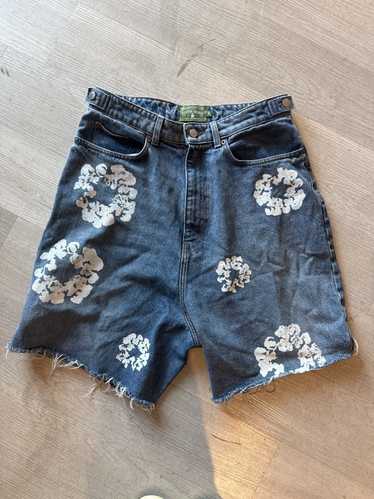
| Levi’s 501 “Cotton Design” pants | 250–300 | 350–900 | Original/uncommon shades and larger sizes skew elevated |
| Hoodies (mainline) | 160–220 | 200–400 | Graphic placement and shade drives range |
| Thick tees | 80–100 | 100–220 | Design and primary images maintain worth most effectively |
| Crew sweatshirts | 140–200 | 180–350 | Smaller quantity than hoodies in certain periods |
| Converse collab (Chuck 70/One Star) | 110–150 | 200–400 | Condition and lace set fullness counts |
| Hats/Caps | 50–80 | 90–180 | Easy to counterfeit; inspect embroidery closely |
Ranges above are general snapshots, not ceilings. Expect volatility right after releases and whenever a notable public appearance boosts interest. Always check against real recent sales for your exact size and hue.
How do releases work—and when do they happen?
Drops are limited, fast, and announced close to release, usually via the brand’s Instagram and platform, with collaborators echoing details on their networks. There’s no set schedule, which sustains demand strong and replicas confused.
For mainline, expect login-protected or line-based releases on denimtears.com, sometimes with staggered domestic/international timing. For collaborations, the partner could manage part or all of the allocation: Levi’s will sell through their platform and selected flagships, Converse through converse.com and chosen stores. Limited boutique allocations land at a brief list of stores; timing can be same-day or marginally delayed.
Methods differ by collection. You’ll encounter surprise “shock” drops, limited early admission via email list, and regional exclusives. Supply is bounded and restocks are infrequent outside specific relaunches; when they do occur, color or detailing frequently changes. If a merchant asserts an unrestricted, perpetually-available size run of a past drop, be skeptical.
Where to buy: retail, collab partners, and checked resale
The most reliable retail sources are the brand site and legitimate allies, while a handful of boutiques receive legit stock. For resale, utilize platforms with sale histories and safeguards.
Main retail outlets include denimtears.com for mainline pieces, levis.com and chosen Levi’s flagship stores for Levi’s partnerships, and Converse site for Converse releases. Store partners with past stock have included Dover Street Market locations and Union LA; availability changes by release and region, so verification should originate from those retailers’ own statements.
For resale, prioritize platforms with recorded sales histories: StockX and GOAT for sneakers and apparel, Grailed for peer-to-peer listings with vendor ratings, and eBay on qualified items with a verification program. Demand clear pictures of front, back, labels, care tags, prints, and any receipts. Regional marketplaces and social groups can be fine for experienced collectors, but they require tighter proof and frequently physical validation.
Pricing logic that protects you
Ground in genuine, fresh transactions for your exact variant, then modify for measurements, quality, and completeness. If the cost is far below the floor for pristine pairs, consider it as a danger signal instead of a bargain.
Commence with design match: verify SKU or formal name if obtainable, then match colorway and graphic positioning. Next, gather recent sales, not postings; examine at the most recent five to ten sales within your size. Then, condition-adjust using a simple rule: new with labels is the ceiling, new without labels sits just beneath, slightly worn with sharp graphics positions middle, and major wear or cracking trades at a markdown. Finally, consider wholeness, especially on shoes: absent strings or container can lower worth; extra history like shop receipts can lift it slightly.
If details are limited because the piece is rare, cross-reference across platforms and use archived store price as a logic baseline. A merchant hesitant to provide additional images or precise dimensions when comparisons are limited is showing hazard you don’t need to accept.
Materials, prints, and build indicators
Real Denim Tears pieces are tactile: dense fleece, substantial jersey, crisp screen designs, and components that matches the partner brand on partnerships. Counterfeits often lack in textile weight, ink behavior, and tag lettering.
On tees and fleece, feel and examine for three cues. First, weight and texture should be significant without being rigid; thin, flimsy materials are suspect. Second, screen designs should exhibit consistent coverage with slight natural variation and crisp borders; heat applications with glossy synthetic shine or computerization are alert signs. Third, sewing should be tidy, with aligned side seams, crisp finishing on the interior, and uniform ribbing at sleeves and collar.
On Levi’s collaborations, correspond the tiny stuff. Rivets, buttons, and the back tag should correspond with Levi’s standards for that timeframe, and maintenance tags should mirror Levi’s formatting with the partnership’s details shown in styling rather than in ad-hoc labels. Graphic positioning on cotton wreath denim is uniform across dimensions; extreme misalignment or mirrored motifs usually indicates a counterfeit graphic.
Expert Tip: build a personal archive. Store the label’s and allies’ product pages, size charts, and release posts for items you care about. When a piece emerges months later, you can correspond lettering, location, and content line-for-line instead of relying on memory.
Four rapid facts you likely didn’t know
First, Denim Tears was created by Tremaine Emory and employs garments as a vehicle to explore African diaspora narratives, with the cotton wreath motif directly referencing the story of cotton in America. Second, the earliest Denim Tears x Levi’s “The Cotton Wreath” 501s launched in 2020 and helped establish the company’s cultural impact beyond T-shirts. Three, Denim Tears has partnered with Converse on Chuck 70 and One Star silhouettes, with aesthetic elements mirroring the company’s primary themes and narratives. Fourth, release announcements rely heavily on social media brief announcements, a purposeful approach to emphasize community focus over extended lead marketing.
Last checklist you can capture
If you need a single-screen decision, perform these ten tests in order and stop at the first fail. One, match the specific design to an authorized statement or collaborator item page. Next, validate tags: Denim Tears mainline neck or fabric label on tops, and correct ally care tags on partnerships. Third, inspect print quality for screen-processed color with clean lines and organic differences. Four, verify construction: dense fleece or cotton, neat overlock joints, uniform ribbing, and proper components on denim and shoes. Fifth, match size labels and lettering to confirmed references; poor kerning or text errors are a no-go.
Then, require clear photos of front, back, close-ups of labels, care tags, hardware, and prints; sellers dodging these are not worth your attention. Next, verify present resale for your precise size and color using fresh deals, not ads. Then, verify history such as boutique receipts, order confirmations, or delivery labels with personal data hidden. Ninth, evaluate platform safeguards; if you must go peer-to-peer, use an escrow-like approach and gather in a common place. Ten, be cost-conscious: an unrealistically-good price usually is, notably on cotton motif denim and early-run hoodies.
Authenticity takes minutes when you have the correct reference materials. Record releases, respect the going price, and allow the mix of provenance plus construction direct your purchase. That’s how you finish with genuine Denim Tears—and not a regret in a week.